Guide
Lisbon in three days: ride up, walk down
Three days that let trams and the metro do the climbing and your legs do the descending: the castle hill and Alfama, Belém on a day it is open, and Bairro Alto by night, with the tickets to book and what each day costs.

By Spike Travel Editorial Desk, Editorial team
Published Oct 12, 2026. 9 min read
Disclosure: A researched itinerary built on the Spike Travel Lisbon dossier and the operators' own pages. No press trip, free ticket or comp was involved, and no business named here saw this copy before publication. Prices, hours and closures were checked on 12 October 2026; USD figures use the ECB rate of that day (€1 = $1.118).
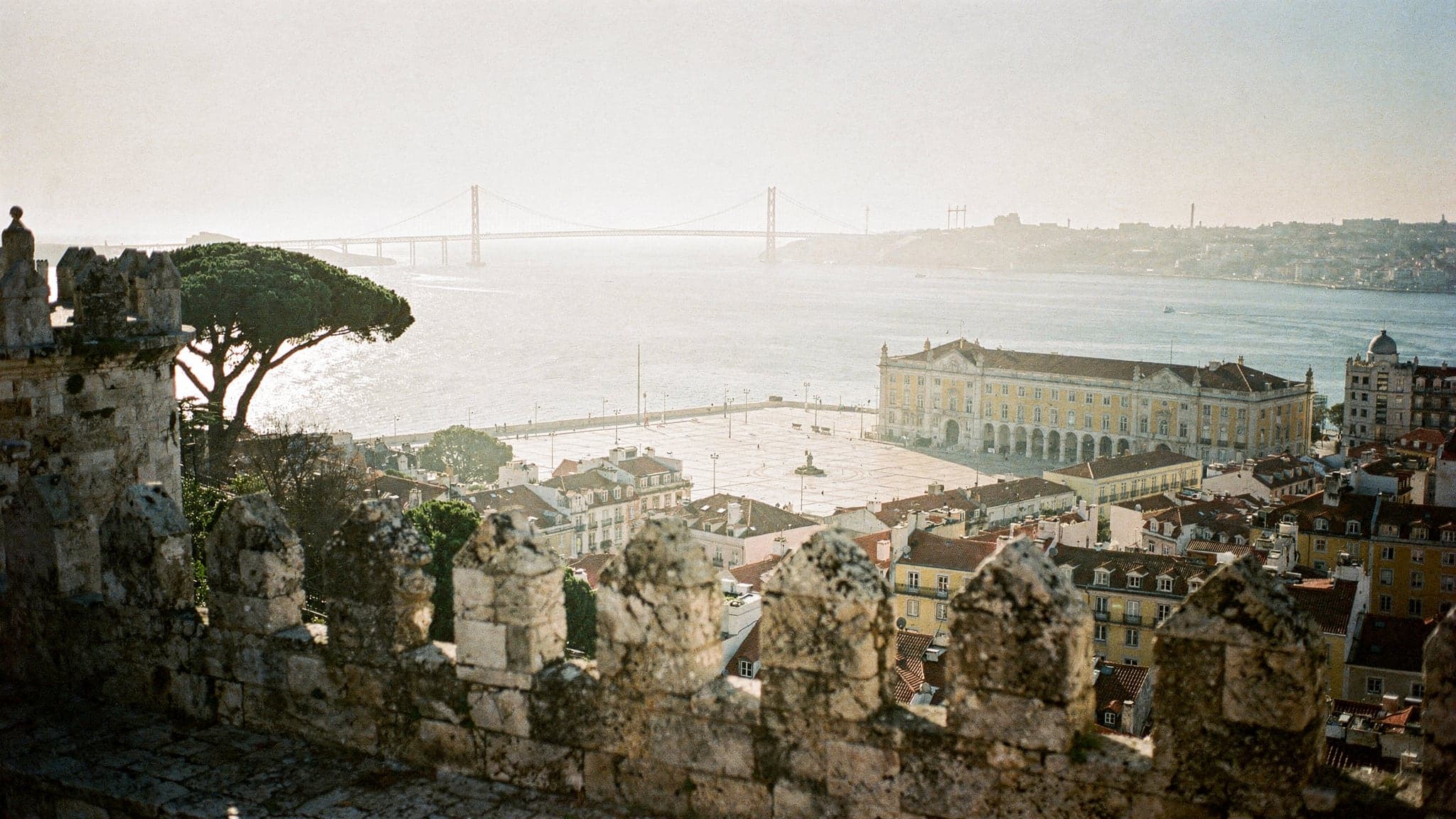
Lisbon has one rule above all others: ride up, walk down. This plan follows it for three full days. It groups the sights that share a hillside and books the tickets that sell out. It also works around the closures still in force in 2026. It assumes two people sharing a mid-range room. Prices come from our Lisbon dossier and the operators' own pages, checked on 12 October 2026.
Set the order before you book
Two closing days fix the sequence. Jerónimos Monastery and the Belém Tower shut every Monday, so day 2 cannot fall on a Monday. The Gulbenkian Museum shuts every Tuesday, so day 3 cannot fall on a Tuesday. The castle opens daily. Land on a Monday and the days run in the order written here.
Book three tickets online as soon as your dates are fixed: a timed slot at Jerónimos (€18), a timed slot at the Belém Tower (€15) about 90 minutes later, and entry to the Castelo de São Jorge (€17, or €8.50 for ages 13 to 25). The Belém monuments warn that tickets often sell out and cannot be bought on the day. Jerónimos also closes on 13 June, the city's Santo António holiday.
Then sort out transport. Buy a navegante ocasional card (€0.50) from a machine at the airport metro station and load it with zapping credit. Each ride then costs €1.72, against €1.90 for a single ticket, €1.92 if you tap a bank card at the gates and €3.30 for a tram ticket bought from the driver. The 24-hour pass (€7.25) only pays from your fifth ride in a day, and this plan rarely needs four. The dossier's getting around section has the rest.
Day 1 in Alfama and on the castle hill
The oldest quarters, from the top down. Every stop today is on the dossier's shortlist.
Morning. Be at Martim Moniz before 9 a.m. and board tram 28 towards Graça. At midday the queue here can pass an hour and the packed cars are where pickpockets work, so this early start matters more than anything else in the plan. Get off in Graça and climb to the Miradouro da Senhora do Monte for the widest view of the city, then cross to the Miradouro da Graça. Both are free. The castle gate, a short walk away, opens at 9:00. Give the ramparts an hour.
Then let gravity take over. The lanes below the castle drop to the Portas do Sol and Santa Luzia viewpoints, where Alfama's terracotta roofs step down to the Tagus, and on through stepped alleys to the Sé, the cathedral. Cruise-ship mornings push tour groups into Alfama. The earlier you pass through, the more of it you have to yourself.
Afternoon. Lunch is a bifana, the garlicky pork sandwich, at As Bifanas do Afonso on Rua da Madalena, a few minutes from the Sé. Snack bars charge about €3 to €4.50. Then walk the Baixa, the flat grid rebuilt after the 1755 earthquake, from the riverside Praça do Comércio up Rua Augusta to Rossio. Ignore the restaurants with picture menus and touts at the door.
Chiado sits above you, and the Santa Justa lift that used to save the climb has been shut since the Glória funicular crash of September 2025. Use the long escalators inside Baixa-Chiado metro station instead. Go in at the Rua do Crucifixo entrance and ride up to the Chiado exit; you never pass the ticket gates. At the top, Manteigaria bakes pastéis de nata in full view of the counter all day. Buy one, then go back to your room for an hour. You will want your legs tonight.
Evening. Start with a shot of ginjinha, the sour-cherry liqueur, at A Ginjinha on Largo de São Domingos, a counter that has been pouring since 1840. The men murmuring offers of hashish around Rossio sell bay leaves and flour, police told Reuters. Keep walking. For dinner, any neighbourhood tasca will do: bacalhau à Brás, salt cod scrambled with egg and matchstick potatoes, is on almost every menu. Numbeo's crowd-sourced figures put a three-course dinner for two at a mid-range place at about €55 before wine. Go to bed early.
What day 1 costs. The castle (€17), two rides (€3.44) and €40 to €50 for food and drink: about €60 to €70 each before your room.
Day 2 in Belém and along the river
Monuments in the morning, the waterfront at its best hour. Never on a Monday. Both monuments are on the shortlist, and the tarts are on the dossier's list of things to order.
Morning. Catch tram 15E at Praça do Comércio for the flat ride west along the river to Belém. Your first slot is the Jerónimos cloister at 9:30, the minute it opens and before the coaches arrive. Its Manueline stonework is all carved ropes, shells and sea creatures, and the galleries fill quickly. The ticket offices close at 16:30, one more reason to arrive with your ticket already on your phone.
From the monastery it is a short walk along Rua de Belém to Pastéis de Belém, baking custard tarts since 1837. One costs €1.60 and a box of six €9.60, and the take-away queue moves faster than it looks. Then cross the riverside gardens to the Belém Tower for your second slot. It reopened in May 2026 after a year of restoration, with a cap on daily visitors, and it can close at short notice in rough weather.
Afternoon. Ride the 15E back to Cais do Sodré and have a late lunch at the Mercado da Ribeira, where the Time Out Market food hall shares a roof with the produce market. Aim for 15:00. At 13:00, and again after 20:00, it is packed.
Then take the ferry across the Tagus to Cacilhas in the hour before sunset. The crossing takes about ten minutes and costs €1.60 each way on zapping credit, and it gives you the best view back at the city. Transtejo, which runs it, said in September 2026 that it wants to raise prices on occasional tickets, which are mostly bought by tourists, so check the board at the pier.
Evening. From Cais do Sodré the green metro line runs straight to Intendente for Cervejaria Ramiro, serving clams, crab and beer since 1956. Seafood is priced by the kilo, so ask the weight before the crab arrives, and finish as the regulars do, with a prego, a steak sandwich. Ramiro is closed on Mondays, another reason this day never falls on one. If you would rather stay by the river, the bars on Rua Nova do Carvalho, the street painted pink, run late.
What day 2 costs. Entries (€33), about €10 in trams, ferries and the metro, and €45 to €65 for food and drink, two tarts included, more if the crab is big: about €90 to €110 each.
Day 3 in the Gulbenkian, Príncipe Real and Bairro Alto
Art in the morning, the western hills in the afternoon, fado at night. Never on a Tuesday. The Gulbenkian and fado are both on the shortlist.
Morning. Take the blue line to São Sebastião for the Gulbenkian, which opens at 10:00. €16 covers the founder's collection, which runs from Egyptian antiquities to Lalique jewellery, and the modern art centre, CAM. Both sit in one of the city's best gardens, free to enter from sunrise to sunset.
If it rains, the red line runs from the same station to Oriente for the Oceanário, where adults pay €25.50 for the 16:00 to 18:30 slot and €29.90 in the morning. Two rainy-day standbys are shut: the national tile museum has been closed for renovation since November 2025, and the Lisboa Card's own notice lists the National Museum of Ancient Art among the museums closed for works.
Afternoon. Ride the metro to Rato, changing at Marquês de Pombal, and walk along Rua da Escola Politécnica to Príncipe Real, a district of gardens, antique shops and boutiques. Carry on to the Miradouro de São Pedro de Alcântara. The terrace sits at the top of the closed Glória funicular, and the castle you climbed on day 1 faces you across the valley. From here the Bairro Alto grid slopes down to Largo do Camões, where O Trevo serves a standing-room bifana if lunch feels long ago.
Evening. Fado, the city's song of longing, belongs in a small room. Tasca do Chico in Bairro Alto hosts fado vadio, amateurs taking turns, in a room barely bigger than a living room; check which nights they sing and arrive early. The alternative is dinner at an Alfama fado house, where many set a minimum spend, so ask the figure before you sit down. Either way, nobody talks while someone is singing. Afterwards the bars of Bairro Alto run late, and at weekends its lanes stay loud past 2 a.m.
What day 3 costs. The Gulbenkian (€16), about €5 in rides and €45 to €55 for food and drink, plus any fado minimum spend: about €65 to €75 each.
Swap day 3 for Sintra
Our dossier's advice is to give Sintra a fourth day rather than squeeze it in. If palaces matter more to you than art and Bairro Alto, swap day 3 for Sintra, on a weekday. At summer weekends traffic on the hill roads backs up and palace slots sell out.
Trains from Rossio take about 40 minutes, and the €11.40 24-hour pass covers them as well as the metro and buses in town. Pena Palace sells entry for a set date and time; the Essential Visit, with the park and terraces, is €20, and in summer you should buy it online the day before at the latest. The Moorish Castle costs €12, and Quinta da Regaleira, with its spiral initiation well, €20. Pick two. Pena and Regaleira plus the train come to €51.40 a head before you eat. The other day trips are in the dossier's what to do section.
What three days cost
For one person sharing a double for three nights at mid-range:
- Entries: €66 for the castle, Jerónimos, the Belém Tower and the Gulbenkian
- Transport: about €23, counting the €0.50 card and the metro to and from the airport
- Food and drink: €130 to €170
- Room: €150 to €240, half of a 3-star double at €100 to €160 a night in spring or autumn
- Tourist tax: €12, at €4 a night
That comes to about €380 to €510, or €125 to €170 a day, roughly $140 to $190 at the European Central Bank's rate of $1.1181 to the euro on 12 October 2026. June, high summer and big-event weeks push room rates up. The dossier's budget tiers show what more or less money buys.
The calculator below starts from the dossier's mid-range figure of $185 a day. Put in your own nights and party size.
Loading tool…
What can still go wrong
The castle has warned that a strike on 17 October 2026 may disrupt visits, so check its site the day before if you are in town that week. From 1 November it closes at 18:00, with last entry at 17:30, instead of 21:00.
October averages 111 mm of rain and November 134 mm, and the polished calçada paving turns slick when it is wet. Wear shoes with grip. On a wet day, take Uber or Bolt for the climbs; both are cheap for short hops.
The historic funiculars stay shut. Carris had no firm reopening dates for Glória, Bica, Lavra or the Santa Justa lift by September 2026, and a new Glória funicular is targeted for 2029. The modern Graça funicular reopened on 30 April 2026 but takes only cards, contactless and MB Way. Check Carris's status page before you plan around any of them.
Pickpockets work trams 15, 25 and 28 and the crowds around Rossio and Belém. Keep your phone out of your back pocket and your bag zipped, in front of you.
Questions people ask
Is three days enough for Lisbon?
For the city, yes. Three full days covers the castle hill and Alfama, Belém, Chiado and Bairro Alto, and a fado night. Sintra needs a fourth day; with only three, swap it in for day 3 only if palaces matter more to you than the Gulbenkian and Bairro Alto.
Is the Lisboa Card worth it for three days?
Not for this plan. The 72-hour card costs €62, while the castle, Jerónimos and the Belém Tower (€50 at full price) plus about €15 of trams and metro come to roughly the same. Cardholders also book Jerónimos and Belém Tower slots from a capped allocation, and only after redeeming the card.
What if one of my three days is a Monday?
Make it day 1 or day 3. Jerónimos, the Belém Tower and Cervejaria Ramiro close on Mondays, while the castle and the Gulbenkian open. Keep day 3 off a Tuesday, when the Gulbenkian is closed.
Are Lisbon's funiculars and the Santa Justa lift running?
Not the historic ones. Glória, Bica, Lavra and the Santa Justa lift were still closed in September 2026 after the 2025 Glória crash, with no firm reopening dates. The modern Graça funicular reopened on 30 April 2026. For the climb to Chiado, use the escalators inside Baixa-Chiado metro station.
How do I get from Lisbon airport to the centre?
Take the metro red line from Aeroporto and change at Alameda or São Sebastião: 25 to 35 minutes for €1.90, plus €0.50 for the reusable navegante card. A taxi costs about €10 to €15 by day, luggage included.
Sources
Where the facts on this page come from. Dates show when we last checked each one.
- Mosteiro dos Jerónimos and Torre de Belém: Visit, hours and pricesaccessed Oct 12, 2026
- Castelo de São Jorge: Schedules (summer and winter hours, 17 October strike notice)accessed Oct 12, 2026
- Castelo de São Jorge: Choose your ticketaccessed Oct 12, 2026
- Fundação Calouste Gulbenkian: Horários (closed on Tuesdays)accessed Oct 12, 2026
- Gulbenkian: Ticketsaccessed Oct 12, 2026
- Metropolitano de Lisboa: Novas tarifas 2026 (single, zapping, bank card and 24-hour fares)accessed Oct 12, 2026
- Carris: Occasional fares (tram tickets bought on board)accessed Oct 12, 2026
- Carris: Equipamentos Históricos de Lisboa status pageaccessed Oct 12, 2026
- Lisboa para Pessoas: Um ano depois da tragédia da Glória (1 September 2026)accessed Oct 12, 2026
- Transtejo Soflusa: Tarifário (Cacilhas to Cais do Sodré zapping fare from 16 March 2026)accessed Oct 12, 2026
- Observador: Transtejo quer subir bilhetes turísticos entre Cais do Sodré e Cacilhas (23 September 2026)accessed Oct 12, 2026
- Turismo de Lisboa: Lisboa Card (prices, inclusions, booking rules and closures)accessed Oct 12, 2026
- Parques de Sintra: Opening times and pricesaccessed Oct 12, 2026
- Quinta da Regaleira: Visits and 2026 pricesaccessed Oct 12, 2026
- Oceanário de Lisboa: Plan your visitaccessed Oct 12, 2026
- Pastéis de Belém: Menuaccessed Oct 12, 2026
- Cervejaria Ramiro: Opening hours (closed Mondays)accessed Oct 12, 2026
- Museu Nacional do Azulejo (closure notice)accessed Oct 12, 2026
- The Lisbon Connection: Baixa-Chiado metro station escalators (local guide)accessed Oct 12, 2026
- Câmara Municipal de Lisboa: Taxa municipal turísticaaccessed Oct 12, 2026
- Lisbon Airport: Getting to and from the airport by public transportaccessed Oct 12, 2026
- IPMA: Normal Climatológica Lisboa / Instituto Geofísico 1991–2020accessed Oct 12, 2026
- Government of Canada: Travel advice for Portugal (pickpockets on trams 15, 25 and 28)accessed Oct 12, 2026
- Reuters: Lisbon tourism at threat from fake drug dealersaccessed Oct 12, 2026
- Numbeo: Cost of living in Lisbon (crowd-sourced, used as a sanity check)accessed Oct 12, 2026
- European Central Bank: EUR/USD reference rate (1.1181 on 12 October 2026)accessed Oct 12, 2026
Lisbon dossier
Steep cobbled lanes, river light on tiled walls, and a counter espresso that still costs about a euro.
These links go to the booking sites we would use ourselves. Nothing here is currently sponsored.
The Spike, weekly
The destination, the deal and the rule change you need this week.